The Bad-Speaker Draft: Making Your Submission Survive a Laptop and a Hallway
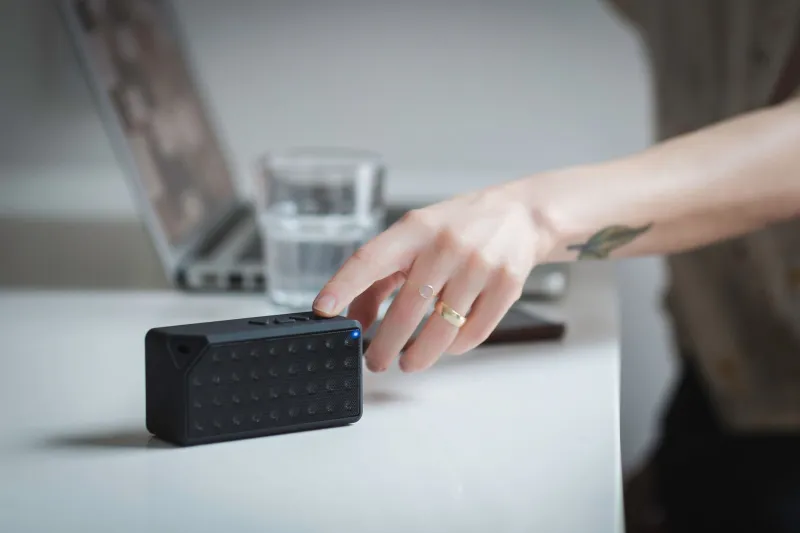
You spent hours on the mix. You checked it on studio monitors, then on good headphones, then maybe on one more pair just to be safe. It sounded rich, wide, and detailed. Then a scout opens your link on a laptop in a conference room while half-listening to someone else talk, and your tape has about four seconds to prove it is worth a second listen.
That is the reality of submissions in 2026. The first play is rarely a silent-room, full-attention, best-equipment moment. It is a laptop speaker at 40 percent, a phone in a hallway, one AirPod during a commute, or a browser tab fighting with three others. Your tape does not need to sound expensive in every setting. It needs to survive the bad setting long enough to get the good one.
The Small Speaker Is the Real Green Room
Think of the laptop speaker as the waiting room for your submission. It is not the final venue. It is the place where a scout decides whether to move your link into the yes pile, the maybe pile, or the place links go to be forgotten. If the words are mushy, the music is swallowing the vocal, or the levels swing so much that the listener has to keep reaching for the volume, the tape is working against itself before anyone has formed an opinion about the work.
This is not about dumbing down your sound. It is about protecting the information a scout needs: who is talking, what they are saying, where the scene is going, and why it matters. Small speakers are unforgiving about that information. They reward clarity, consistency, and a little restraint.
The Ten-Minute Bad-Playback Pass
Before you send anything to Submit Your Tapes or anywhere else, do a dedicated bad-playback pass. It should take about ten minutes, and it should feel slightly uncomfortable.
First, play the tape on your laptop speakers at a volume low enough that you could still hold a conversation. You are not listening for beauty. You are listening for what disappears. Second, play it on your phone from across the room. This is the hallway test. If you cannot follow the dialogue or the vocal from six feet away, a scout will not lean in to help you. Third, listen with one earbud in while doing something else for a minute. This is the divided-attention test. It mimics the way a lot of first listens actually happen.
Write down the exact moments where you lose the thread. Do not trust your memory. A timestamped list is the fastest path to a useful fix.
Dialogue and Vocals: The Consonant Check
On a small speaker, consonants do a lot of the work. If the T, K, P, and S sounds are buried, the listener gets a wash of tone instead of words. That is fine for a mood piece and terrible for a tape that depends on character, joke, argument, or story.
Check your most important lines on the phone speaker. Then check them again with the music bed playing. If you have to strain, the mix is probably too polite to the music and too rude to the voice. A small, targeted boost in the vocal range or a gentle cut in the competing midrange can do more than a full remix. You are not looking for radio-announcer brightness. You are looking for enough edge that the words land.
Music Beds and Room Tone: Leave Space for the Point
Music is the usual suspect. A bed that feels tasteful in headphones can become a blanket on a laptop. Try pulling the music down two or three decibels under dialogue or vocals and see if you miss it. Often you will not. If the track still feels full, consider whether the arrangement is crowding the same frequencies as the voice. A simpler bed is not a weaker bed. It is a bed that knows when to get out of the way.
Room tone is the other quiet problem. Hiss, hum, refrigerator drone, and street rumble can sit below your attention on good speakers and become the loudest thing on a phone. Do not over-clean to the point of sterility, but do ask whether the background is adding atmosphere or just asking the listener to work harder. If you can hear the room more than the person in it, rebalance.
Levels That Travel: Consistency Beats Polish
A scout should not have to ride the volume slider through your tape. Big jumps between scenes, whisper-quiet intros, and sudden loud music all read as unfinished on a small speaker, even when they are intentional. Normalize the overall listening experience so the quiet parts are still audible and the loud parts are not punishing.
This does not mean flattening the emotion. It means giving the listener a stable place to stand. Check the first thirty seconds, the middle, and the ending at the same volume. If one section makes you reach for the controls, fix that before you worry about the finer points of the mix.
Captions and Context: The Safety Net
Captions are not a substitute for a clean mix, but they are a useful safety net. If your tape has dialogue, consider offering a transcript or captions when the platform allows it. A scout may not use them on the first pass, but they help when someone watches in a crowded room or with the sound low. More importantly, writing the transcript forces you to notice which lines are carrying the story. If those lines are not clear in the audio, you have found your fix list.
What Scouts Remember
They rarely remember that your low end was tight. They remember whether they could follow the tape, whether it felt confident, and whether they wanted to send it to someone else. The bad-speaker draft is not about sounding small. It is about making sure your strongest ideas do not get lost when the listening conditions are less than ideal.
So before you hit submit, close the studio door, leave the good headphones on the desk, and play the tape through the worst speaker you have. If it still works there, it will work almost anywhere.