The Uncredited Co-Star: What Your Tape's Room Tone Confesses to a Scout
Photo: Reice Hamel Jr., CC BY-SA 4.0, via Wikimedia Commons
The Sound Before the Sound
A scout puts on headphones. They have maybe forty tabs open, a coffee going cold, and a queue of links that all claim to be the one. They press play. Before your first line lands, before the first chord rings out, before the first frame settles, they hear the room.
Maybe it's a low HVAC rumble. Maybe it's laptop fan. Maybe it's a hiss so steady it feels like a test pattern. Or maybe it's nothing — just a clean, even hush that lets your actual work step forward. That nothing is not nothing. It's the audio floor, and it's the first thing your tape says about you.
Room tone is the uncredited co-star of every submission. It doesn't get a poster credit, but it shapes how the whole thing reads. The good news: you don't need a treated studio or a $2,000 microphone to get it right. You need thirty seconds of attention and a willingness to listen to the boring parts of your own tape.
What the Floor Says Before You Say Anything
Most reviewers won't consciously think, "This submission has an uneven noise floor and a 60-cycle hum." They'll just feel a small drag. The tape feels less finished. Less intentional. Less easy to trust. A clean floor, on the other hand, reads as competence. It says someone checked. It says the gaps were considered, not abandoned.
This matters across the board. A filmmaker's dialogue scene with clean room tone feels professional even if the camera is a phone. A musician's acoustic demo with a quiet, even bed feels like a choice rather than a limitation. A performer's self-tape with no air conditioner wrestling them for attention lets the casting reader stay with the performance instead of the appliance.
Scouts are not audio engineers. They're tired people with pattern recognition. A noisy floor is a tiny friction point. Enough tiny friction points and your link becomes the one they close first.
Record the Room Like It's a Scene
Here's the unglamorous move: after you finish your take, stand still and record thirty to sixty seconds of the room by yourself. Don't speak. Don't shuffle. Don't let the dog in. Just capture the ambient bed at the same settings you used for the take.
This is called room tone, and it's the cheapest insurance in submission audio. You can use it to fill gaps between lines, smooth an edit, or give a noise-reduction tool something to learn from. It also forces you to hear what your microphone has been hearing all along. That alone is worth the minute.
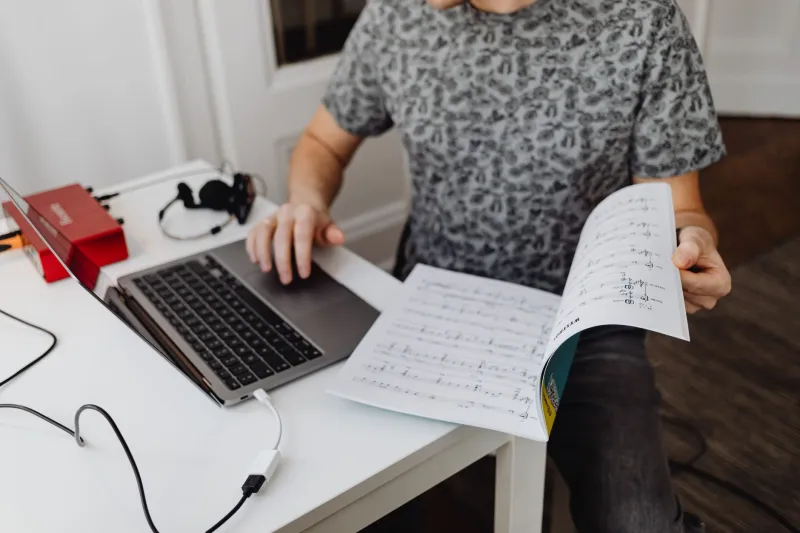
If you're recording on a phone, put it on a stand or a stack of books. If you're recording on a laptop, move the laptop off the desk if the fan kicks on. If you're recording in an apartment with a window unit, turn it off for the take and for the room tone. Yes, it will get warm. Yes, it's worth it. Welcome to show business.
Gaps Are Part of the Performance
A lot of submissions treat silence like a mistake to be scrubbed out. They cut every breath, every pause, every half-second of air until the tape sounds like a ransom note assembled from words. That's not clean. That's unnerving.
Quiet gaps read as confidence. A pause before a punchline. A beat after a scene's reveal. A breath between verses. Those gaps tell a reviewer that the performer trusts the material enough to let it breathe. They also make the loud parts louder. Silence is not the absence of a performance; it's the frame around it.
The trick is that gaps need a consistent floor underneath them. If your pauses are dead silent but your dialogue has a hum, the edit will sound like a patchwork. If your gaps carry the same gentle room tone as the rest of the take, the whole thing feels continuous. That's the goal: not perfect silence, but believable quiet.
Fix the Floor Without Becoming an Audio Engineer
You do not need to master noise reduction. You need to avoid the three biggest floor problems: constant hum, uneven hiss, and jarring dead air.
For hum, find the source. It's usually a fridge, a dimmer switch, a charger, or a heating system. Move the microphone, turn the thing off, or record in a different corner. Software can help, but source removal is free and sounds better.
For hiss, get the mic closer to the performer and lower the input gain. A close mic at a lower level usually means less amplified room noise. If you're using a phone, don't bury it across the room and crank the volume later. That's just hiss with extra steps.
For dead air, use your room tone. Drop a thin bed under the gaps at low volume so the quiet has texture. Don't overdo it. If you can hear the room tone as a separate character, it's too loud. It should be felt, not featured.
The Five-Minute Pre-Upload Check
Before you send the link, listen to your tape on the worst headphones you own. Earbuds, laptop speakers, the free ones from an old flight. If the floor noise is distracting there, it will be distracting to a scout.
Then listen to the first ten seconds and the last ten seconds. Those are the edges of your submission, and edges are where room tone gets sloppy. Does the tape open with a clean hush or a sudden appliance? Does it end with a graceful fade or an abrupt chop? Fix the edges and you've fixed most of the impression.
Finally, check the file itself. A 128kbps MP3 can smear quiet details into a watery hiss. A video export with mismatched audio settings can introduce a hum that wasn't in the original. The tech check is part of the craft. Submit Your Tapes exists because the gap between good work and a good submission is often just a few unglamorous details.
The Quiet Flex
Nobody has ever watched a tape and said, "Wow, what a room tone." That's the point. The best audio floor is the one that never asks for attention. It lets the scout forget they're listening through a laptop and remember they're watching a person take a swing.
So before you upload, give the room a minute. Record the hush. Listen for the hum. Treat the gaps like they're part of the performance. Your tape has a co-star whether you cast it or not. Make sure it shows up ready.