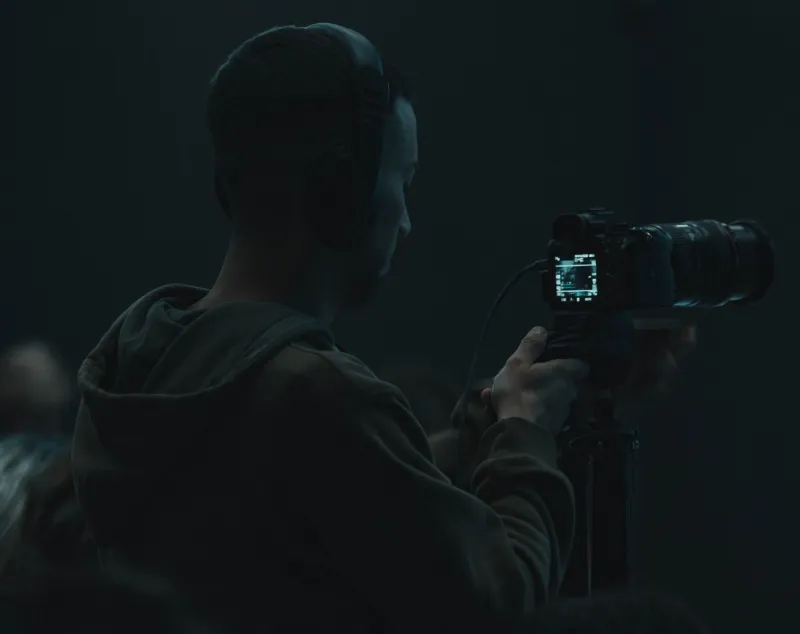
Stop Throwing One Tape at the Wall: The Case for a Submission Portfolio

Let's be honest about the ritual. You finish something. You find a call for submissions — a label's demo drop, a festival's late deadline, a casting notice, an open mic with actual industry in the room. You fire off the file. You refresh your email for eleven days.
And then you do it again three months later with the same tape.
That's not submitting. That's hoping with extra steps.
The one-shot model was always a little bit broken
The single-tape submission made sense when the bottleneck was access. Getting your work in front of a decision-maker used to be the hard part, so you polished one thing to a mirror shine and prayed it landed on the right desk at the right moment.
Access isn't the bottleneck anymore. Volume is. Every scout, programmer, and A&R rep we've ever spoken with describes the same inbox: hundreds of files, a deadline, and a growing reflex to skim. In a pile like that, one tape is a coin flip, and a coin flip has no memory. It doesn't compound. It doesn't teach you anything when it lands tails.
What compounds is a body of work you're actively curating — a small set of pieces that you send, revise, and track over time. Call it a submission portfolio.
What a submission portfolio actually is
Not a dump of everything you've ever made. Not a website with fourteen tabs. A submission portfolio is three to five pieces, chosen on purpose, that together say something a single tape can't: this is who I am, and here's the range of what I can do with it.
We'd argue for a three-part structure:
The anchor. Your strongest, most undeniable piece. The one that gets forwarded. It does most of the work and it should be the thing you're most willing to defend.
The range piece. Deliberately different in register — the acoustic version of your loudest song, the comedic scene after the heavy drama, the choreography tape after the monologue. This is where you prove you're not a one-trick submission.
The wildcard. The one that doesn't fit neatly. The experiment, the odd little film, the live-to-tape take with a mistake in it. Scouts remember wildcards. They're also the piece most people cut, which is exactly why keeping yours is an advantage.
Two more slots if you've got them. Both should pass one test: does this make the portfolio more coherent, or just longer?
Range is not the same as scattered
Here's where this goes wrong. People hear "show range" and send a folk ballad, a techno remix, a stand-up set, and a spec commercial — and now they look like four different people sharing a hard drive.
The fix is a through-line, and it's usually a single sentence. Not a bio. A sentence. "I make quiet songs about loud families." "I build tense little thrillers about ordinary people." "I'm a character actor who specializes in people who are trying too hard." Write it down. If a piece in your portfolio can't be connected to that sentence in one step, it's either the wildcard or it's out.
Range within a point of view is a strength. Range instead of a point of view is a filing problem for whoever opens your folder.
Track it like it's a job, because it is
Nobody tells you this part. The submission portfolio only works if you know what's happening to it.
A spreadsheet will do. Track the opportunity, the date, which piece you sent, what the ask was, and what came back. Do that for six months and patterns appear that no amount of gut feeling will surface. Maybe the anchor never gets a response but the range piece gets three callbacks — that's useful, and it's invisible if you're only sending one tape at a time.
Iterate on evidence. Swap out the piece that never lands. Rewrite the cold open the reviewers keep skipping. Add a fourth piece when you notice every call seems to want the same thing you don't have yet — then go make it.
Every submission is a brick
Our whole thing here is the line about your tape, their eyes, and the break you built. That last part is the argument of this entire piece. A break isn't something that happens to you when the right scout opens the right file. It's something you assemble, submission by submission, until the body of work is too coherent and too consistent to ignore.
One tape is a lottery ticket. Three to five curated pieces, sent deliberately, tracked honestly, and revised on what you learn — that's a portfolio. That's a case. That's the thing that gets forwarded to someone else without you in the room.
So before you send the next one: open the folder. Look at what's actually in there. Pick your anchor, your range piece, your wildcard. Write the sentence.
Then go build the break.